

In reality, if you import or market timber, wood, paper, or paper-based products, you may already need to comply with the EUTR (EU Timber Regulation).
The risk is not theoretical. It is immediate. Even before thinking about future deadlines, there is one unavoidable reality: the EUTR is already fully in force. In the event of an inspection, this is the framework against which your company will be assessed.
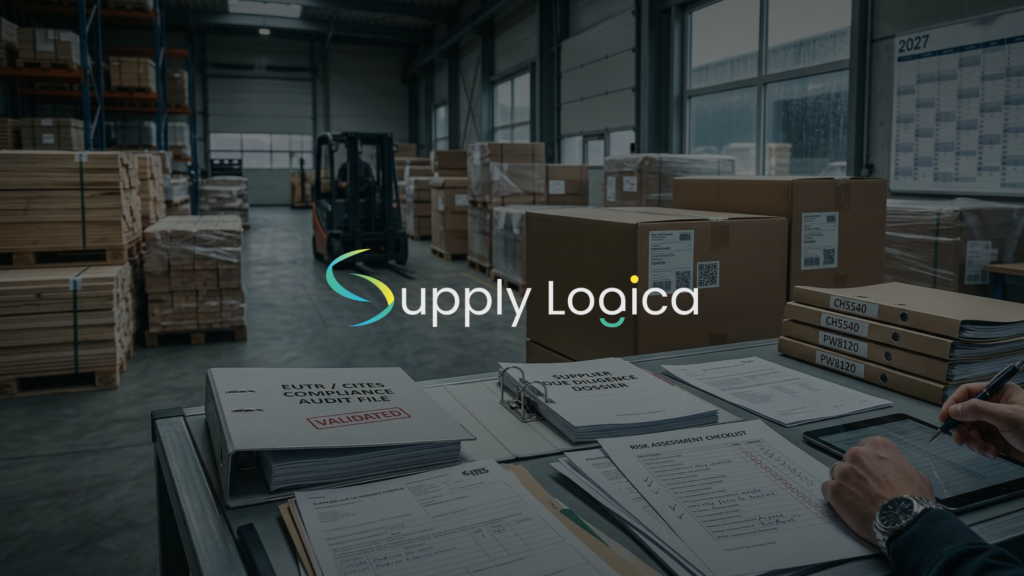
EUTR Is Not on Hold: Controls Are Still Ongoing
Thinking that the current regulation is somehow “sleeping” while waiting for the next one is a common mistake. The EUTR already imposes strict rules to prevent illegally harvested timber from being placed on the European market.
Whether you are a large group or a micro-enterprise, if you are an Operator (the first party placing the product on the EU market), you have a legal obligation to maintain an active, documented, and demonstrable Due Diligence System. This is not optional. It is a condition for market access.
The Transition to EUDR: A Point Worth Anticipating
It is true that the regulatory landscape will evolve: the EUTR will be replaced by the EUDR on 30 December 2026.
But beware of the timing trap: because the timber sector is already regulated under the EUTR, small companies in this sector will not benefit from the grace period until June 2027 that applies to other sectors. If you are under EUTR today, you will move into the new system as early as December 2026. This is one more reason to make sure your EUTR process is already robust now: it is the only way to prepare for this transition with confidence.
Your Scope Is Probably Broader Than You Think
Another frequent blind spot is assuming that the EUTR only concerns logs or raw wood. In practice, the regulation covers a wide range of derived products, identified through their customs codes (HS/CN codes): fuel wood, sawn timber, panels, furniture, and a large share of paper and cardboard products.
As long as you have not validated your HS/CN codes, you do not really know how far the EUTR affects your business. This is the starting point of any serious compliance approach.
What EUTR Actually Requires
An invoice is not enough. A supplier’s statement made in good faith is not enough either. The regulation imposes three levels of obligation:
Access to information — You must know the precise origin of the timber (country and region of harvest), the species used, and have documents proving the legality of the harvest. A concrete example: a shipment of furniture imported from Southeast Asia may require tracing the documentation all the way back to the forest certificate at source.
Risk assessment — You must actively assess the risk of illegality: the level of corruption in the country of origin, the complexity of the supply chain, and the certifications available.
Risk mitigation — If the risk is not negligible, you must request additional evidence before placing the products on the market.
A critical point: you may delegate the collection of information to a service provider, but the legal responsibility remains entirely yours.
Another common mistake is believing that you can shield yourself behind your supplier. In clear terms: you may delegate information gathering, but the legal responsibility still remains yours.
Anticipating Now: Compliance Is a Process, Not a Box to Tick
One principle sums it all up: data must be collected upstream, never on the day of an inspection. Rebuilding complex documentary chains and harmonising product codes is not about “putting a file together” — it is about setting up a durable process.
This is exactly where most companies get blocked: suppliers contacted too late, missing documents, inconsistencies between shipments. If your EUTR compliance currently relies on scattered Excel files, the end-of-2026 transition will simply become unmanageable.
What Supply Logica Brings in Practical Terms
An effective EUTR system is, above all, an industrialised Due Diligence System built on reliable, traceable, and reusable data. That is exactly what we help you build: centralisation of product and supplier information, structured collection of traceability elements, simplified risk assessment, and operational monitoring so you are ready at any time in the event of an audit.
If you work with timber products, the right time to act is not the end of 2026. It is now. Map your flows, verify your HS/CN codes, strengthen your due diligence processes in a controlled environment, and start building today the solid foundation that will protect your business tomorrow.
To learn more about how Supply Logica can support your EUTR/EUDR compliance journey, contact our team today.