

What Is Due Diligence?
The concept of due diligence is gradually establishing itself as a cornerstone of the transition toward more responsible supply chains. Still unclear for some, it is nevertheless becoming unavoidable with the entry into force of regulations such as the European Union Deforestation Regulation (EUDR) or the EU Timber Regulation (EUTR). But what does this due diligence obligation actually cover? And what must companies put in place to comply with it?
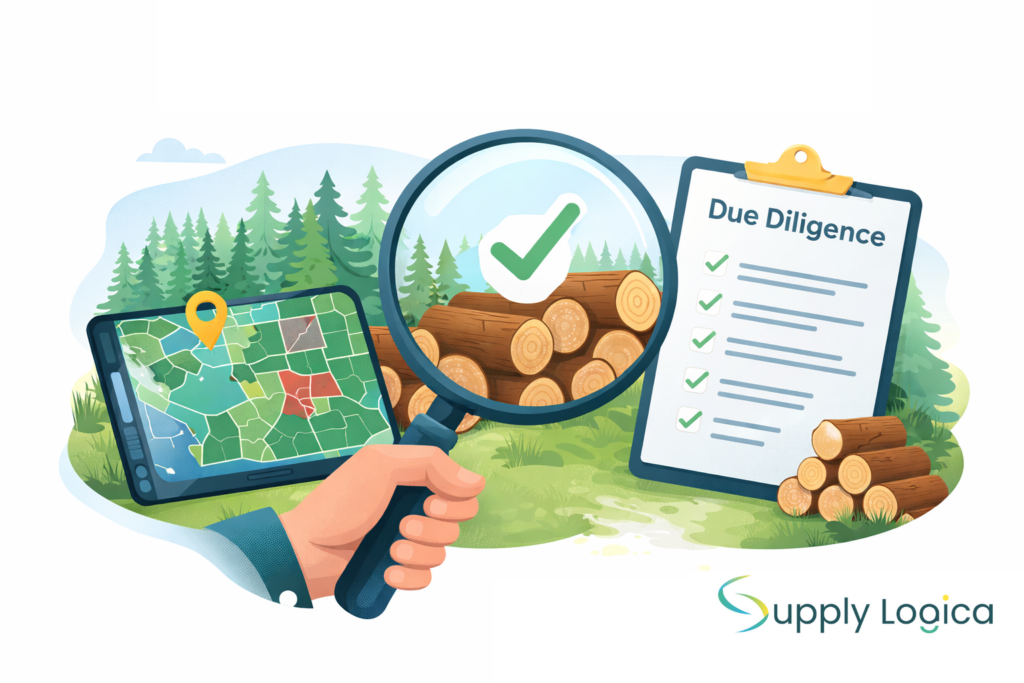
Due diligence refers to all the measures a company must take to identify, prevent, mitigate, and report on the negative impacts of its activities, particularly on human rights, the environment, or corruption. It is not an obligation of result, but an obligation of means: companies must be able to demonstrate that they have implemented appropriate processes to monitor their suppliers, trace their products, and avoid major risks within their supply chains.
The challenges are significant. From a legal perspective, companies can now be held responsible for damage caused by their direct—and sometimes indirect—suppliers, particularly in cases of deforestation, forced labor, or environmental violations. From an economic standpoint, a failure to carry out due diligence may result in financial penalties, market withdrawal, or even the loss of contracts in public or private tenders. Finally, from a reputational perspective, expectations from consumers, investors, and NGOs continue to grow.
To meet these obligations, companies must implement a structured due diligence policy: risk mapping, supplier selection and assessment, collection of supporting documentation, geographic traceability, contractual commitments, and corrective action plans. They must also ensure active transparency by regularly communicating on their efforts and results, for example through CSR or non-financial reporting.
Due diligence should not be seen as an administrative burden, but as a lever for transformation. It enables companies to anticipate crises, secure their supply chains, and differentiate themselves positively in a market where sustainability is becoming a strategic criterion.
When it comes to sustainability, inaction is more costly than anticipation. Due diligence is the ability to prove that action is being taken—not just promised.
Supply Logica supports companies in the practical implementation of their due diligence approach by ensuring product traceability, centralized management of compliance data, and preparation for regulatory requirements such as the EUDR or the EUTR (the EU Timber Regulation).
Would you like to structure or streamline your due diligence processes, or secure your regulatory compliance? Contact our team to discuss your needs.